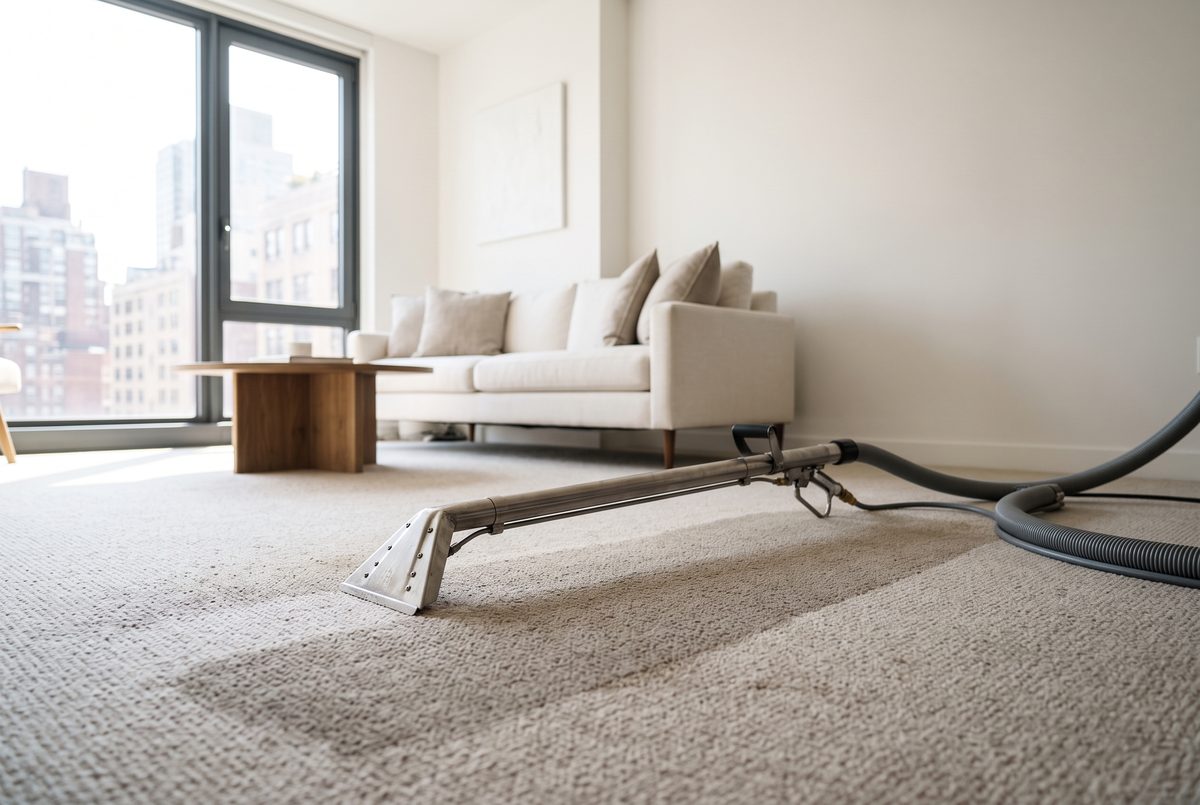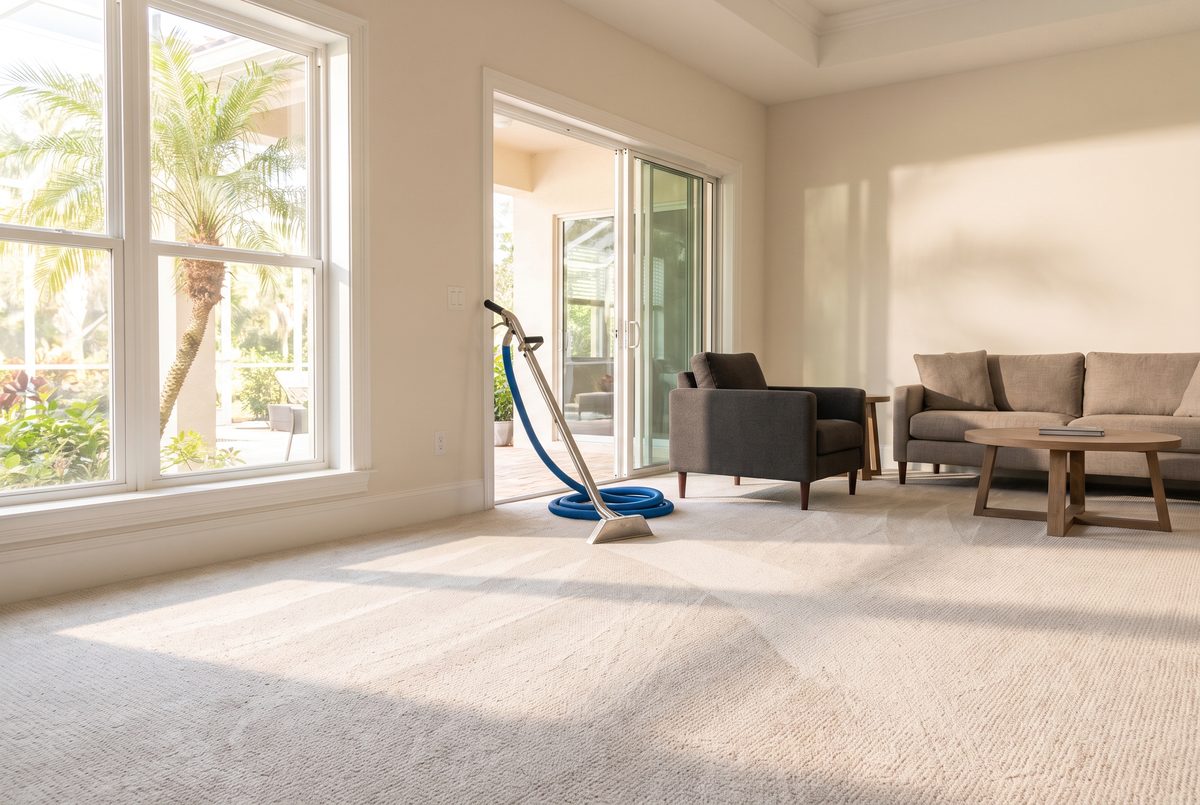
Walk the rooms before you sign anything
The three minutes between the last hose going out the door and the paperwork being signed are the most useful three minutes of the whole job. Everything is fresh, the equipment is still in the driveway, and a fix you ask for now is a fix somebody can still make. Leave it a week and the same conversation becomes your word against a receipt.
Start with the spots you pointed out at the start
Whatever made you pick up the phone is the first thing to look at. The coffee that went over by the sofa, the patch inside the back door, the place where the dog sleeps. Go to each one and look at it together.
If a spot has gone, good. If it is lighter but still there, that is worth a conversation now, because a lot of it comes down to what the mark actually is. Dye from a red drink or a bleach splash is a color change in the fiber rather than soil sitting on top of it, so a clean often will not bring the original color back. Traffic lane wear, where the fiber itself has been abraded, reads as dirt but is not. An honest answer sounds like that one looks like fiber damage rather than soil, and you want to hear it from somebody standing in front of you rather than read it in an email later.
What you do not want is silence. If a spot was written into the quote and nobody mentions it, ask straight out whether it was treated and what happened when it was.
Get a light across the traffic lanes
Overhead lighting hides a great deal. Pull a curtain back, or lay a phone flashlight flat on the floor and look across the pile rather than down at it. Raking light shows what a ceiling light flattens out.
You are looking for even color along the routes people actually walk. The hallway, the run from the kitchen to the back door, the turn at the bottom of the stairs. Patchy lanes usually mean the passes were hurried or the pre-spray was not given time to work. Both are far easier to put right while somebody is still there with a wand in their hand.
Press your hand into the pile
Carpet cleaned by hot water extraction should feel damp. It should not feel wet and it should never squelch. Press a flat palm down in a few places, including the middle of the room rather than only the edges.
Over-wetting is the one item on this list that gets worse after everyone leaves. Water that soaks into the backing and the pad takes far longer to go than the fiber on top, and with Central Florida humidity sitting where it does most of the year, that is how a room smells musty three days later. If a room feels properly wet, say so before the van leaves, because more extraction passes are easy while the machine is still hooked up.
Edges, corners and stairs, where a rushed job shows
A wand covers open floor fast. What it does not reach is the edge against the baseboard, the inside corner, and the stair nose where the pile wraps over the front lip. Those need a hand tool, they take time, and they are the first things to go when somebody is running late for the next job.
Look at stairs from the bottom rather than the top. Standing at the bottom puts you eye level with the noses and you will see immediately whether they were done or walked past.
Check the furniture while you are down there. Blocks or foil tabs under the legs of anything sitting on damp carpet stop rust marks and wood stain bleeding into the fiber. If a dresser went straight back onto a wet floor, move it this evening and look underneath.
Not sure the job was finished properly?
Call or text HomeProud at (407) 501-6089, or ask for a free quote at homeproud.net, and we will tell you honestly what a re-clean would fix and what it would not.
Confirm what was treated and what was not
Read the quote back. If it listed three rooms plus the hall runner, confirm the runner was done. If a pet stain and odor treatment was on there, ask which rooms it went on. It feels pedantic for about four seconds, and it is the kind of thing that turns into an awkward phone call a month later.
Ask what was deliberately left alone, too. There are good answers: an antique rug that wants off-site work, a tile and grout floor or a natural stone that needed testing first, a sofa whose care tag ruled out water. Nobody minds a job being scoped down for a real reason. People mind finding out about it in silence.
Ask what the drying plan is
In Orlando this answer matters more than it does in a dry climate. Carpet surface dries in roughly two to six hours after hot water extraction and upholstery padding within a few hours, but those numbers assume air is moving. Shut a house up tight in August and drying stretches well past them.
Ask three things before anyone leaves. How long until you can walk on it in socks, how long until furniture goes back, and whether to run the air conditioning or open the windows. In a Winter Park bungalow with high ceilings the answer may differ from the answer in a small closed-up condo, so ask rather than guess. If the answer is vague, that is information as well.
If something is wrong, say it now
This is the part people find hardest, and it is worth being blunt about why it matters. Raising something while the van is outside costs twenty minutes. Raising it next week costs a return visit and a discussion about what else happened in that hallway in between.
A company that is confident in its work will invite the walkthrough rather than sit through it. We give a firm quote before anything starts and every job is guaranteed, and a guarantee only means much if you are actually invited to look. HomeProud is owner-operated with no subcontracting, so the person who quoted your floors is the person standing in your hallway at the end, which takes out the usual gap between what was sold and who turned up.
If you would rather book somebody who expects to be checked, say so when you call. You can see how we work across Orlando, or ask for a quote and mention up front that you will be walking the rooms at the end.