Why does black mildew keep coming back in shower grout?
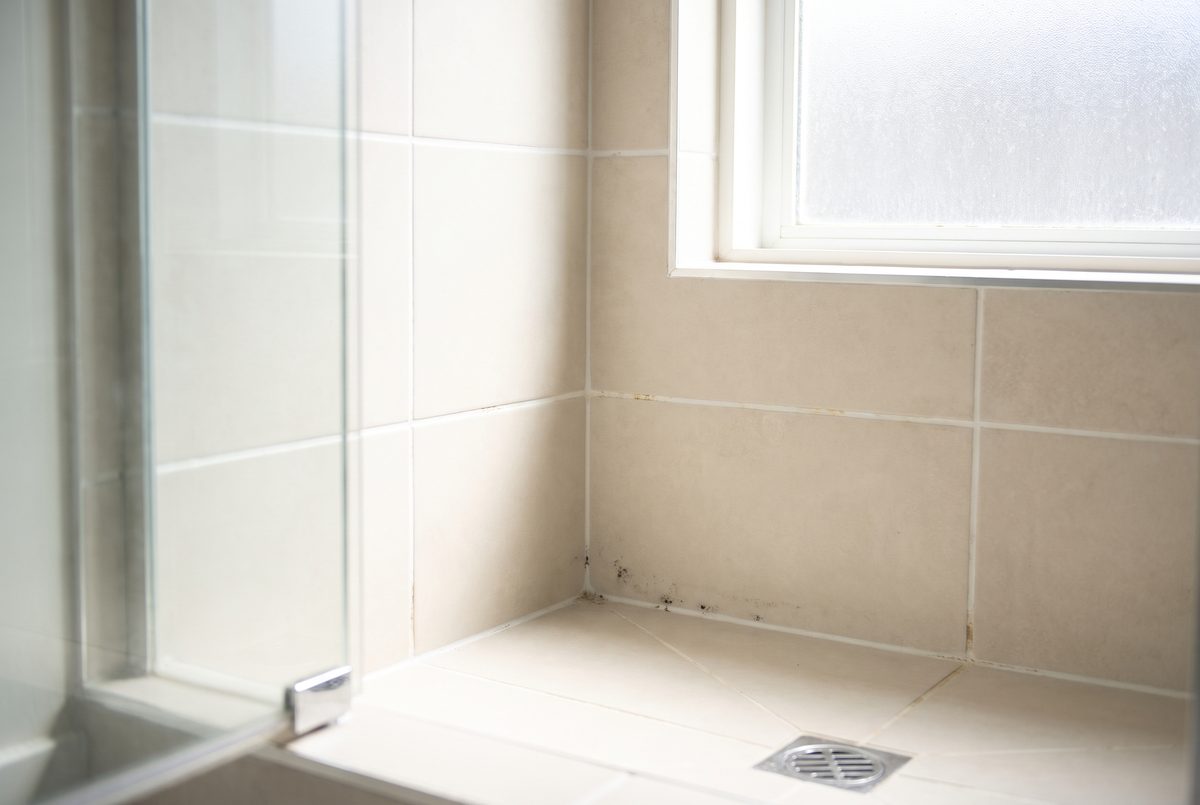
Because the conditions that grew it are still there. Custom Building Products, a grout maker, says in its product FAQ that mold and mildew need a dark, moist area and a food source, and that showers and tub surrounds are a common place for them. The grout itself resists mildew because it's made of cement, the company says, but soap scum on a shower wall can supply the food.
The EPA makes the same point in its brief guide to mold and moisture, last updated in February 2026: if you clean up mold but don't fix the water problem, it will most likely come back. So when the black dots return after a good scrub, look at the damp and the soap scum before you blame the scrub.
Is it surface mildew, stained grout, or a failed joint?
There are three common situations, and each one has a different fix.
| What you see | Likely cause | What fixes it | Who usually does it |
|---|---|---|---|
| Spots that wipe off, then return | A damp shower with soap scum on the grout | More airflow and more frequent cleaning | You |
| Grout that stays dark after a scrub, even when dry | Buildup in the grout, or staining that won't come out | A test clean, then a deep clean and a sealer on cement grout if it lifts | A tile and grout cleaner |
| Cracked or open joints where tile meets the tub or floor | Failed grout or caulk | Repair the joint and fix any leak | A tile installer or a plumber |
In Central Florida, humidity keeps grout damp, so the habits in the next section are worth keeping up.
Can you fix surface mildew yourself?
Usually, yes. The EPA's mold cleanup page says that if mold in the shower seems to reappear, running a fan or opening a window and cleaning more often will usually stop it recurring, or at least keep it to a minimum. The same page says to scrub mold off hard surfaces with detergent and water, then dry them completely.
- Run the bathroom fan or open the window when you shower, as the EPA recommends.
- Clean the grout often enough that soap scum doesn't build up on it.
- Scrub any spots with detergent and water, then dry the area completely.
- Keep indoor humidity below 60 percent if you can, as the EPA's brief guide advises, using the air conditioner or a dehumidifier when needed.
Go easy on the bleach. The EPA says a biocide such as chlorine bleach isn't recommended as a routine part of mold cleanup, and that bleach should never be mixed with cleaners containing ammonia, because toxic fumes could be produced.
Tile makers add their own cautions. Daltile's care guide says bleaches and alkaline cleaners can be especially problematic and may take several rinses to remove. American Olean's ceramic tile care guide says acids can damage grout and ammonia can discolor it. If the shower is natural stone, Marazzi's care guide says stone cleaners should never contain acid or bleach.
What if the grout stays dark after you scrub it?
Judge it dry first. Look at the grout a few hours after the last shower, not straight after one, and if the lower rows never get a chance to dry, treat that as the moisture problem above rather than a cleaning one. If it's still dark when it's dry, it's either buildup that a deep clean can lift or staining that won't come out, and only a test clean on a small patch tells you which. American Olean says most tile installations use cement-based grout, and that it should be sealed after installation to keep it from staining. Epoxy grout is different: the same American Olean guide says it's chemically cured and acid resistant, so it doesn't need a sealer.
This is the job a deep clean is for. For tile and grout cleaning, HomeProud uses a high-pressure spinner machine that puts hot water into the tile and grout and vacuums it back out in the same pass. Ceramic, porcelain and natural stone are tested first. You can see how it works on the tile and grout cleaning page.
If it's cement grout, seal it next. Custom Building Products recommends sealing grout periodically so soap scum can't penetrate the surface, which makes removal much easier. HomeProud offers grout sealing as its own service after the clean. It isn't a shield, though. Daltile says neither sealing nor epoxy grout will guarantee against buildup or discoloration, so the shower still needs regular cleaning.
Some staining may stay. The EPA notes that mold can cause staining, and that it may not be possible to restore an item's original appearance. If the grout has been dark for years, ask about that when you get the quote.
Grout still dark after you scrub?
Call or text (407) 501-6089 for a firm quote before any work starts.
When is it not a cleaning job at all?
When the joint itself has failed. Custom Building Products says caulk, not grout, goes in transition joints, such as where tile meets the tub or the wall meets the floor, because caulk can flex with movement without cracking. If those corners or the grout lines are cracked, open or missing, cleaning can't close the gap. The EPA's advice is to fix plumbing leaks and other water problems as soon as possible.
Don't cover it up either. The EPA says not to paint or caulk moldy surfaces. Clean the mold off and let the surface dry first.
HomeProud doesn't regrout, replace tile or do mold remediation. The EPA says that if mold covers more than 10 square feet, or there's been a lot of water damage, you should consult its guide to mold remediation, and that any contractor you hire should have experience cleaning up mold.
What does this mean for a Sand Lake bathroom?
Sand Lake is the part of southwest Orlando built around Sand Lake Road, in the 32819 and 32836 zip codes, next to Dr. Phillips and Bay Hill. Our Sand Lake page describes the main floors here as mostly tile, sometimes large-format stone or porcelain, so it's worth checking what the bathroom tile is too.
Before you scrub or seal, find out what the tile and the grout are. Stone needs an acid-free cleaner, as Marazzi's guide above says, and epoxy grout doesn't need sealing at all. If nobody knows, test any cleaner on a small spot first, and ask for the tile to be checked when you get a quote.
HomeProud works across Sand Lake and the rest of the Orlando area, Monday to Saturday from 9am to 7pm.
Who does the work?
Adam Corbett, the owner. He quotes the job and does the cleaning himself, with no subcontractors. Adam is IICRC certified, the business is licensed and insured, and the quote is firm before work starts, with no upselling at the door.
If you'd rather not phone, you can request a free quote online. Say whether the grout has ever been sealed, if you know, and where the dark lines are.
Tile and grout cleaning in Sand Lake, done by the owner
Call or text (407) 501-6089 to book a quote, Monday to Saturday.