What is the white residue on your grout?
Usually one of four things, and they don't have the same fix. The Tile Council of North America's FAQ on white residue, as it read in November 2026, lists them: efflorescence, a sealer that has turned white, something it calls latex leaching, and detergent residue that has trapped soil.
It matters which one you have, because a routine tile and grout cleaning is for the last of them, and the TCNA says the others can need other work. The table sorts them by what you'd notice at home.
| What you notice | Likely cause, per the TCNA | What a HomeProud clean does | First call |
|---|---|---|---|
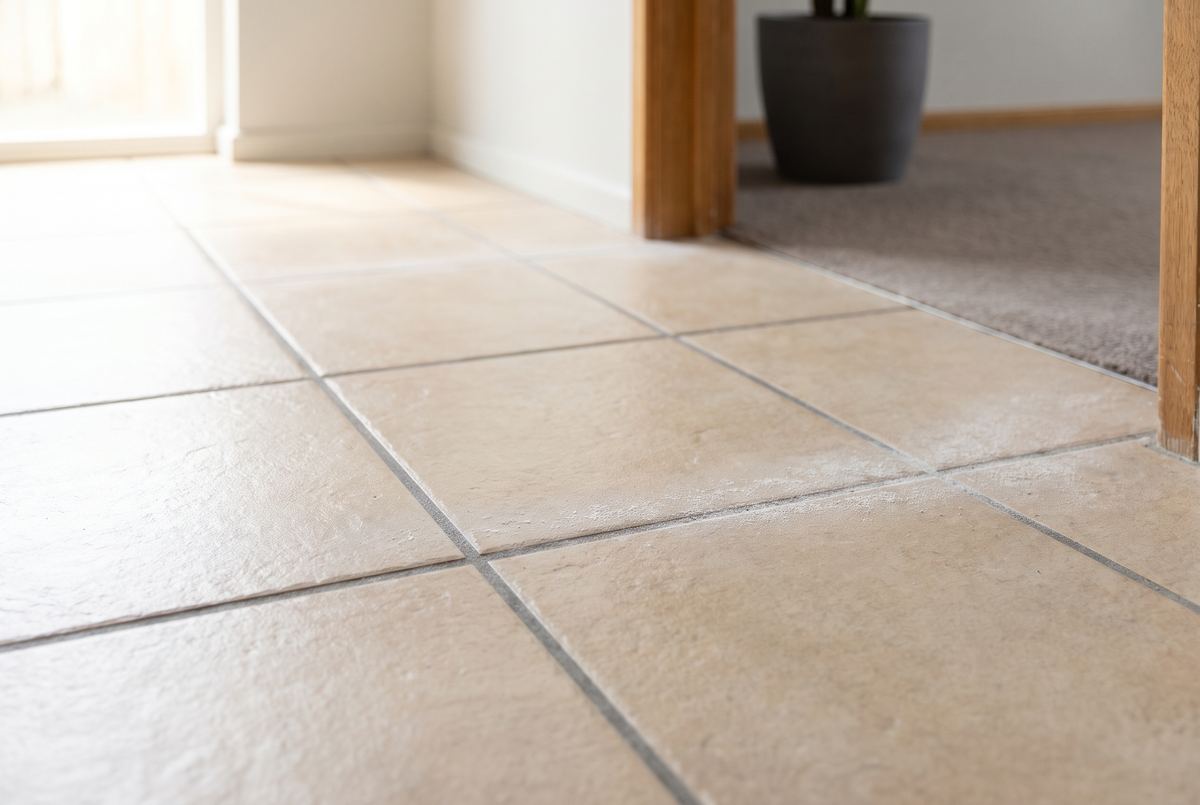
| A whitish mineral powder on the grout that keeps coming back | Efflorescence: minerals carried to the surface as water evaporates | Doesn't stop the moisture that keeps bringing minerals up | Someone who can trace where the water is coming from |
| A white cast that appeared after a coating went on | A topical acrylic sealer reacting with moisture | Doesn't fix a coating that has turned white | Whoever applied the sealer |
| White on grout that is new or was recently redone | Latex leaching: polymer brought to the surface by excess water | Doesn't fix polymer brought out of new grout | The installer who grouted it |
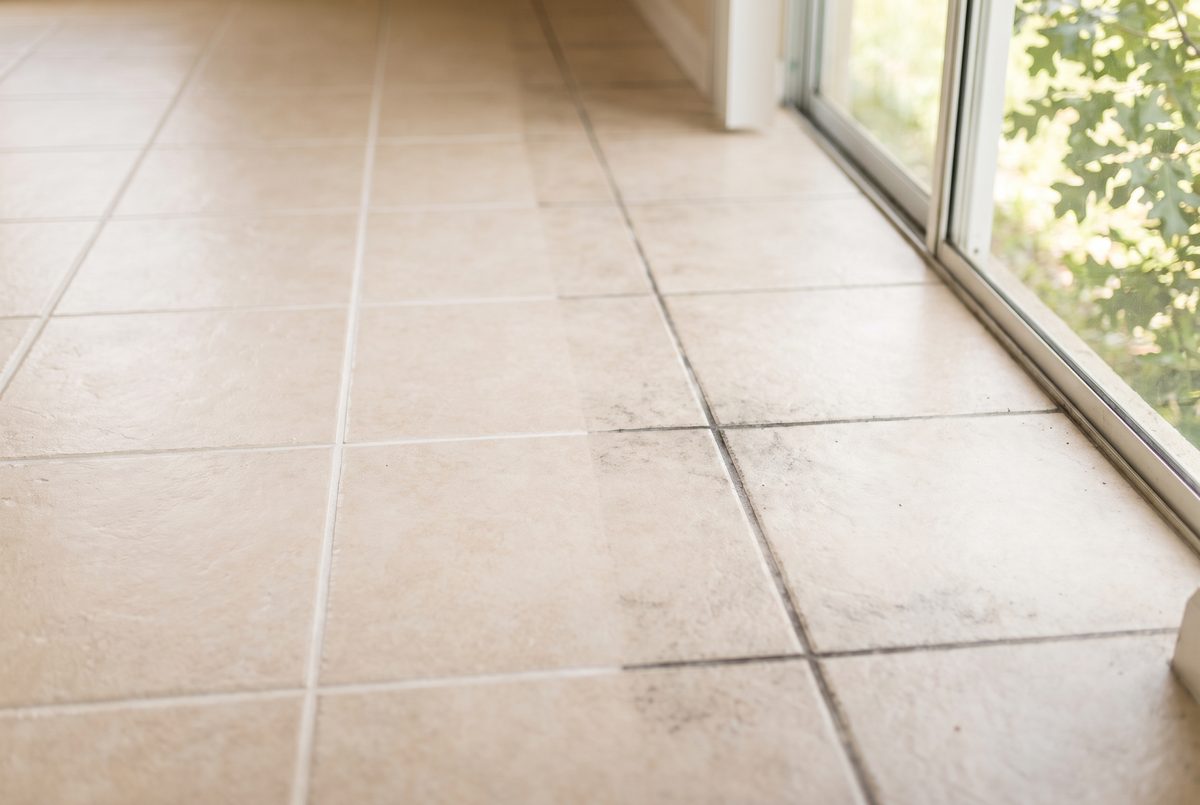
| A pale, dull film that built up slowly, mostly in the grout lines | Detergent residue that has combined with light-colored soil | Can lift the film and the soil in it | A tile and grout cleaner |
How do you tell efflorescence from a film?
Start with what the TCNA says efflorescence is. It compares it to the white powder left in a glass when the water evaporates: minerals dissolve in water, travel to the surface of the grout, and stay there when the water leaves. So efflorescence is a mineral deposit, and it needs a steady supply of water from somewhere.
A detergent film is a different thing. The TCNA describes detergent residue as often virtually invisible on its own, and says it can combine with soil into a sticky film that builds up over time. It shows mostly in the grout because the joint sits lower than the tile and is more porous.
Three questions help you sort it out before you call anyone.
- When did it appear? Right after new grout or a new sealer points to the installer or the product. Slowly, over months of mopping, points to film.
- Where is it? All over the floors you mop is more like film. One area that keeps turning white is worth a moisture check.
- Does it come back? If you wipe it away and the same spot is white again later, something is still feeding it.
None of those is a lab test. They tell you who to call first, and that's all they need to do.
Where does the water come from?
Not from your mop, in most cases. The TCNA says that, except in the rarest of cases, efflorescence doesn't come from the small amount of minerals in the water used to wash a floor, and that typical cleaning doesn't put down enough water to cause it. It says the minerals typically originate in the cement slab below the tile or in the ground below the slab.
More commonly, it says, there is moisture in the ground below the slab that is always evaporating, and that this moisture is invisible to the eye as it travels up through the slab, the tile cement and the grout. Outdoors over concrete, it says rain can cause it over time when other conditions are right.
So a routine clean doesn't end efflorescence. The TCNA's grout cleaning FAQ says removing it is generally best left to an experienced professional, and that once it's removed it can only come back if moisture is still getting in. That removal work and tracing the moisture aren't services HomeProud offers.
A pale film on your tile and grout in Conway?
Call or text Adam at (407) 501-6089 and tell him the rooms and the tile. You'll get a firm quote before any work starts.
What does that mean in an older Conway home?
That the floors in one house aren't always the same age. The Census Bureau's 2020 to 2024 American Community Survey estimates put the median year built for a Conway home at 1975. If your house is around that age, ask what has been done to each floor since: whether it still has its original grout, whether it was regrouted, and whether anyone put a coating on it.
The answers can differ by room, and so can the white. A bathroom that was regrouted recently is a question for the installer. A kitchen floor that has been mopped with the same detergent for years is more likely carrying film. Check each room on its own before you decide the whole house has one problem.
Which kind does a tile and grout cleaning fix?
The film. The TCNA says detergent that hasn't been fully removed can combine with soil into a sticky film, and that preferably the dirty water should be vacuumed off the floor. Its grout cleaning FAQ, checked in November 2026, makes the same point about soap film: an alkaline cleaner that isn't rinsed properly leaves one, and it usually attracts dirt.
That's the job HomeProud's spinner is suited to. The spinner puts hot water into the grout and vacuums it back out in the same pass, so the slurry leaves the floor. Adam tests a small area first so the method suits the surface.
If you're mopping between cleans, the TCNA's advice is that a tile floor can very often be cleaned with hot water or extremely small amounts of cleaner. Less detergent means less to leave behind.
Should you seal grout that has white residue?
Sort out the cause first. For efflorescence, the TCNA says sealing the grout with a penetrating, vapor permeable sealer may help slow the rate of evaporation, and it adds a caution: topical acrylic sealers, which coat the joint and aren't vapor permeable, may turn white from a reaction with moisture. A coating over a damp floor can give you a second white problem on top of the first.
For ordinary grout that's just been cleaned, grout sealing helps the grout resist spills and stains. If white residue is why you're calling, say so when you book and ask what kind of sealer would go on your floor.
Who does the work?
HomeProud Inc is owner-operated. Adam Corbett quotes the job and does it himself, with no subcontracting, so the person you describe the floor to is the person who turns up. The company is licensed and insured, and Adam is IICRC certified. HomeProud doesn't regrout or replace tile, and our post on regrouting versus cleaning covers how to tell failed grout from dirty grout.
Tile and grout cleaning starts at $0.45 per square foot, with a firm quote before work starts. We work in Conway, Belle Isle and across the Orlando area. Call or text (407) 501-6089, or use the free quote form.
Get a firm quote for your tile and grout
Call or text Adam at (407) 501-6089. He quotes the job and does it himself.